How options are taxed
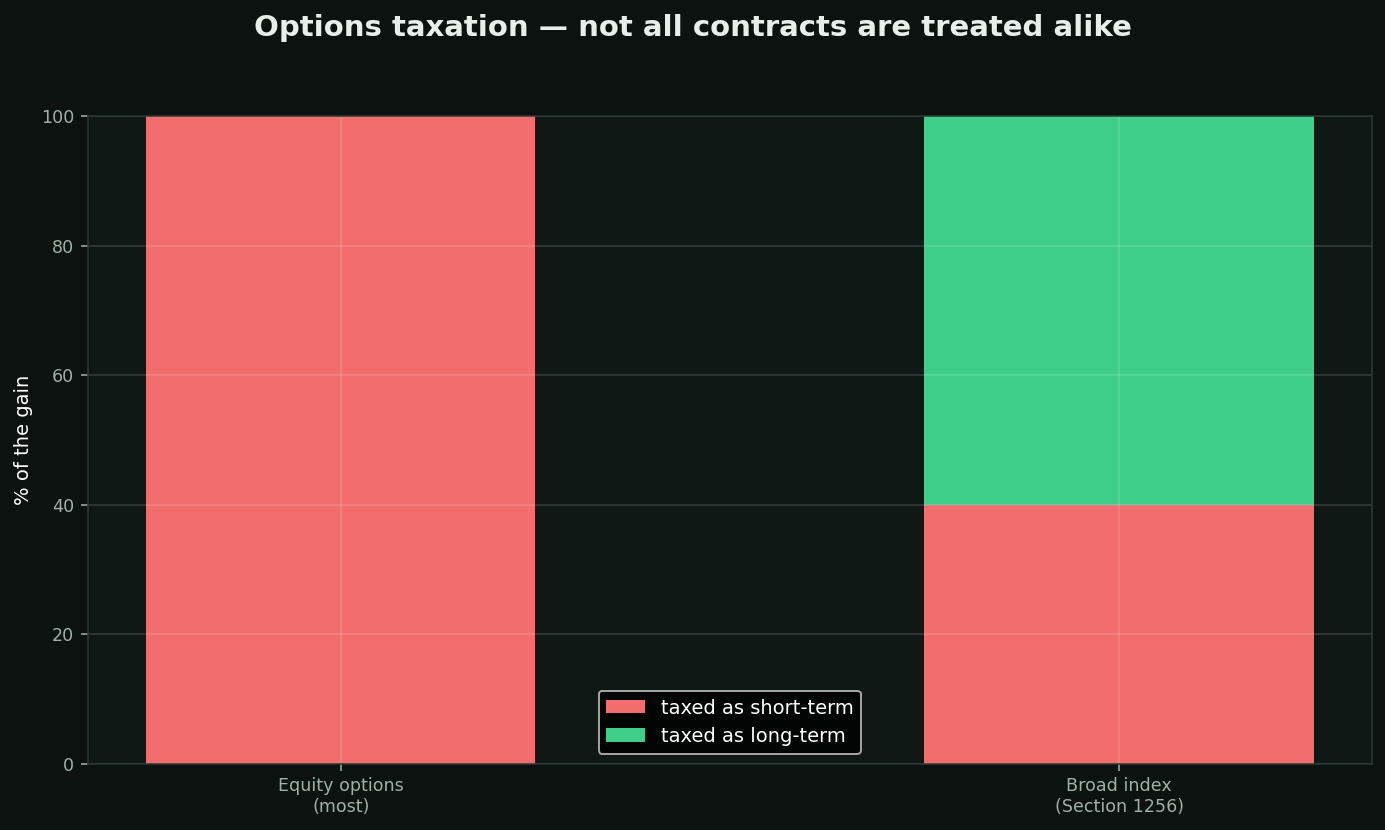
Most equity options: gains are short-term unless you held the position more than a year, which is rare. In practice most options profit is taxed as ordinary income.
Section 1256 contracts — broad-based index options and futures — get different treatment: a 60/40 split, where 60% is treated as long-term and 40% as short-term regardless of how long you held it. They are also marked to market at year end, so unrealised gains are taxed.
Other mechanics:
• An exercised option folds into the stock's cost basis
• Selling a covered call can suspend the holding period of the underlying shares
• Wash sale rules can apply across options and stock on the same underlying
Why this matters: an options strategy that looks better pre-tax can lose to a simpler one after tax.